The Midget Faded Rattlesnake
from
Thomas C. Houston
Website:
http://www.midgetfadeds.com
on
March 10, 2005
View comments about this article!
The Midget Faded Rattlesnake
Crotalus concolor
by
Thomas C. Houston
Undergraduate | Department of Zoology | Oklahoma State University
The Midget Faded Rattlesnake is one of the smallest rattlesnakes in Colorado Plateau Region of the United States. These small rattlesnakes are believed to be a stunted form of the Great Basin Rattlesnake (Crotalus lutosus) similar in superficial appearance to the Hopi Rattlesnake (Crotalus viridis nuntius). Although nuntius and concolor are similar it is not believed to be a direct relationship (Douglas et al. 2002). Recent studies using mitochondrial DNA (mtDNA) and D-2 loop sequencing has suggested to elevate Midget Faded Rattlesnakes as well as others from the “western viridis complex” to full species status (Douglas et al. 2002) .
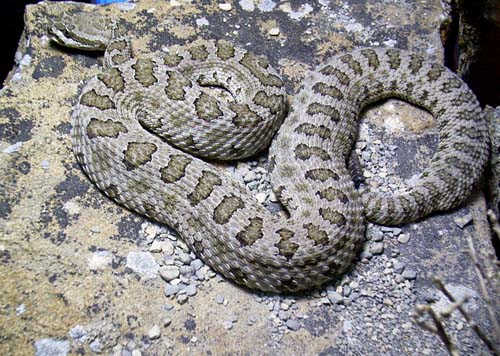
Midget Faded Rattlesnakes can grow to reach 63 cm in total body length and are a cream to yellow brown, or tan and generally have body blotches that are oval to rectangular. Their body blotches are usually only slightly darker than the background and become faded to sometimes absent in older animals. Young usually have prominent markings and can easily be confused with similar species.
Fig 1. Gravid female Crotalus concolor basking.
The Green River Formation in Southwestern Wyoming, Eastern Utah and Western Colorado makes up the entire range of this species. However, a new publication has suggested that the range extends down into a small part of Coconino County, Arizona (Brennan and Holycross 2004). These animals are protected to various degrees within the states they reside. They tend to prefer rocky outcrops in areas where sage is the abundant vegetation. Due to specific habitat preferences these animals do not travel great distances like other species, such as, lutosus and viridis (Ashton 2003).
These animals typically reproduce biennially, triennially or even longer. Gravid females have been found to only move short distances (>20m) from the den site after emergence until parturition in late August to mid September (Ashton and Patton 2001). The offspring are usually around 19-21.5 cm in total length and the number of offspring is usually directly related to female SVL (Ashton and Patton 2001) averaging around 5 per litter.
The venom of the Midget Faded Rattlesnake is composed of a much higher neurotoxin than one would assume. This species carries the presence of a phospholipase A2-based B-neurotoxin (concolor toxin) and several myotoxins (Mackessy et al. 2003) which makes concolor venoms highly toxic. In fact concolor is the most toxic out of the (Western Rattlesnake clade, Crotalus oreganus). It was hypothesized that concolor had an ontogenetic variation in venom composition due to is shifts in diet from juvenile to adulthood. However, it was discovered that although juveniles feed predominantly on lizards (Scleoporus ssp.) and adults on rodents (Peromyscus and Tamias) there isn't much in ontogenetic variation in venoms (Mackessy et al. 2003).
The Midget Faded Rattlesnake is quite rare in collections, in both the private and institutional sector, with only 3 animals registered under ISIS (International Species Information System) worldwide. Despite their rarity they are relatively simple to care for in captivity. The basic care is highly similar to lutosus, viridis, etc. One factor to consider is temperature, most concolor do not live in very hot areas so the extreme heat is detrimental to their health. The most difficult factor in concolor husbandry is the acquisition of legal animals. Because the three major states (Utah, Colorado, and Wyoming), that take up the vast majority of this species geographic range, have protected them from collection, it is highly difficult to get true legal specimens.
Animals taken from the wild in any of the three states without a permit and then transported across states lines are in direct felony violation of the Federal Lacy Act. In addition to that if the said specimen has a market value of greater than $350 and is illegally transported across state lines it is an additional felony violation. Each violation is punishable up to $250,000 fine and 5 years in prison. All in all, without legal documentation of captive propagation, concolor is as much a legal risk as owning a Gila Monster (Heloderma suspectum) without papers. On the other hand there is one locality that isn't yet protected by the state in which they reside, Arizona. However, like with abyssus most of their range within Arizona is within Nationally protected land (Glen Canyon, and the Vermillion Cliff Wilderness Area). Also, with specimens coming from Arizona it is highly difficult to determine if they are indeed true concolor, with out blood work and DNA samples, due to the superficial similarities between some abyssus, nuntius, viridis and even lutosus in the general vicinity.
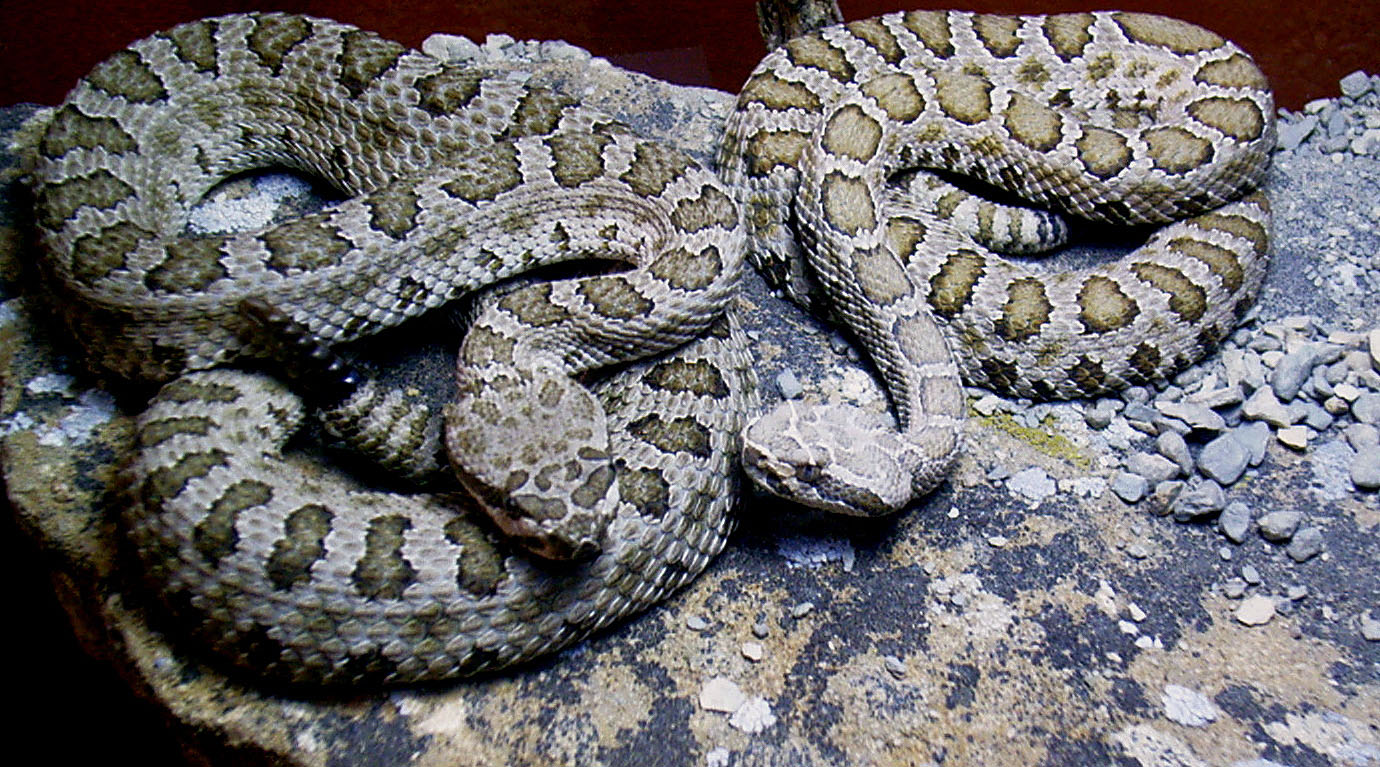
Fig 2. Variation to an extent is common within this species. This photograph illustrates the variation in Crotalus concolor.
Mating behavior has been observed in the wild between 5-17th of July and is the shortest duration of any species in the western clade (Ashton 2003). In captivity these animals breed quite easily. Cooling is suggested for stimulation of behavior and ovulation. Cooling should be done at a slow rate. Avoid feeding for two or three weeks prior to deducing their temperatures to avoid any left over undigested food items. Slowly lower the temperature by ten degrees (F) twice a week until a perfect temperature range of 48- 54 degrees is obtained. It is vital that you check on the animals every two weeks to ensure they are wintering successfully and to provide water.
To ensure proper stimulation the snakes should be cooled for a minimum period of 6-8 weeks. Keep in mind that in the wild hibernation in this particular species is one of the longest. Also, be aware that light is usually not associated with hibernation so try to avoid allowing white light to enter the containers during hibernation. This can be achieved by using hibernation enclosures that have solid walls on all sides and by using a red or black light while attending to the animals bi-weekly. Caution should be used at all times when working with these venomous animals but especially while working in low light situations.
The warming process should be slow and compliment the gradual cooling. After the animals have been warmed for two weeks, feeding should commence. The first meal should be smaller than normal to allow the digestive tract to adjust. Females that are scheduled to breed should be fed twice a week for six weeks to obtain a healthy body weight. Once all the animals have been feeding regularly for six weeks the females should be introduced to the males' enclosure. The pair should be supervised and observations should be conducted the entire cohabitation period to avoid any mishaps. Although, cannibalism is not documented in this species it is known within the family Crotalidae (Houston 2005). Copulation can last from minutes to several hours. After the female has copulated she should be removed from the males enclosure to avoid additional stressed from over stimulated males. This process can be repeated every other day for a week to ensure success.
In the wild parturition occurs in late August to late September (Ashton and Patton 2001). Gestation in this species lasts 395-425 days when properly cycled due to spermatozoa remaining viable in the female's oviduct until the following spring. The females should be placed on a 14:12 L:D light cycle and have access to ample thermal ranges. The female's enclosure should be inspected to insure that any offspring cannot escape. Offspring of this species are 50-100mm smaller than those of larger bodied taxa (Ashton and Patton 2001). However (Ashton and Patton) discovered that offspring size was not directly related to the females SVL (Snout to vent length) (2001).
The babies usually take small newborn pinky mice with little problems and should be fed on a weekly basis. Because of the juveniles wild diet consists of other reptiles, each animal should be housed individually to avoid ophiophagy and to determine successes with eating.
In conclusion, Midget Faded Rattlesnakes (Crotalus concolor) are a wonderful and unique species that requires little effort for successful captive propagation. Although, keeping and breeding concolor is a rewarding experience for all involved, these animals are at high risk from human encroachment and are a species that needs conservational attention. Therefore, with an increase in captive propagation, research, and public education this species can be around for many more generations to enjoy.
Ashton, K. G. 2003. Movement and Mating Behavior of Adult Male Midget-Faded Rattlesnakes, Crotalus oreganus concolor, in Wyoming. Copeia 2003:190-194.
Ashton, K. G. and T.M. Patton. 2001. Movement and reproductive biology of female midget faded rattlesnakes, Crotalus viridis concolor, in Wyoming. Copeia 2001:229- 234.
Brennan, T. C., Holycross, A. T. 2004 Crotalus oreganus concolor. Geo. Dist. Herpetol. Rev. 35(2).
Douglas, M. E., M. R. Douglas, G. W. Schuett, L. W. Porras, and A. T. Holycross. 2002. Phylogeography of the Western Rattlesnake (Crotalus viridis) Complex, with Emphasis on the Colorado Plateau. In Scheutt et al. [ eds. ], Biol. of the Vipers 2002: 11-50.
Houston, T.C. 2005. Ophiophagy In A Captive Sonoran Desert Sidewinder (Crotalus cerastes cercobombus). Herpetol. Rev. [In Review]
Mackessy, S. P., K. Williams, and K. G. Ashton. 2003. Ontogenetic Variation in Venom Composition and Diet of Crotalus oreganus concolor. A Case of Venom Paedomorphosis?. Copeia 2003 : 769-782.
|
The Midget Faded Rattlesnake
|
Reply
|
|
by live4hots on March 10, 2005
|
Mail this to a friend!
|
Hey,
Way to go T.C.!! Great info and very well said!! This is a man who has surely done his research.I look forward to seeing your offspring .If you get around to breeding those Gilas...you know I will have to take one:)) Anyway GREAT article and look forward to seeing those RARE c.b. babies.
Keep up the good work bro!!
Trey
|
| |
|
RE: The Midget Faded Rattlesnake
|
Reply
|
|
by timberrattlesnake89 on March 11, 2005
|
Mail this to a friend!
|
Also,
Shouldn't it be Crotalus viridus concolor instead of Crotalus concolor. Since it is a subspecies of the prarie rattlesnake(Crotalus viridus viridus).
Phillip Higgins
Live and Let Live
|
| |
|
RE: The Midget Faded Rattlesnake
|
Reply
|
|
by TCH_Zoological on March 12, 2005
|
Mail this to a friend!
|
Phillip,
In the first paragraph of my article I describe the most recent reseach which concluded that concolor as well as many others should no longer be a subspecies but a full species such as Crotalus atrox, Crotalus tigris etc. The "western" rattlesnake group has undergone a "renovation" in regards to taxonomy. The only viridis accepted now are the Prairie Rattlesnake (Crotalus viridis viridis) and the Hopi Rattlesnake (Crotalus viridis nuntius).
In 2001 K.G. Ashton and A. de Queiroz suggested that the western rattlesnake group (ie. Crotalus viridis ssp.) be split into two separate clades (groups) the Western group (C. v. viridis and C. v. nuntius) The Eastern group (C.oreganus oregauns) as the basal most form. Therefore in 2001 Midget Fadeds were called Crotalus oreganus concolor. In fact Arizona and Utah still refer to the Midget Faded as a subspecies of the Northern Pacific.
Then a much more in depth study of the same taxonomic group was conducted.
In 2002 Douglas et al. (see literature cited) suggested that ALL species of the former viridis/oreganus group except for Prairies (Crotalus viridis viridis) and Hopis (Crotalus viridis nuntius) should be elevated to full species status (ie. Crotalus concolor, Crotalus helleri, Crotalus cerberus etc.)
It usually takes time before systematic changes get around to everybody. And of course not everyone accepts the changes. However, most state agencies and scientific forums have started calling the Midget Faded (Crotalus concolor) or (Crotalus o. concolor).
As (Crotalus viridis concolor is still accepted but no-longer preferred.
I hope this helps clairify. Thanks for the questions.
T.C.
|
| |
|
RE: The Midget Faded Rattlesnake
|
Reply
|
|
by timberrattlesnake89 on March 12, 2005
|
Mail this to a friend!
|
It is very much like now they are changing the rat snake family of north america from Elaphe to Pantherisis.
Thanks for clarifying,
Phillip
|
| |
|
RE: The Midget Faded Rattlesnake
|
Reply
|
|
by SCherps on November 16, 2005
|
Mail this to a friend!
|
Re: Ashton and Queiroz (2001) mTDNA study and subsequent realignment to eastern and western clades. I think you meant to say that, although a monophyletic but divergent group, C. viridis represents the EASTERN clade and C. oreganus the WESTERN clade. It appears you had it backward.
B. Starrett
|
| |
|
RE: The Midget Faded Rattlesnake
|
Reply
|
|
by TCH_Zoological on December 15, 2005
|
Mail this to a friend!
|
Good call. Thanks. I got my wires crossed so to speak. I knew what I meant but said the opposite. I should drink you a buy....haha I mean buy you a drink...lol.
T.C.
|
| |
|
RE: The Midget Faded Rattlesnake
|
Reply
|
|
by NestofWeasels on March 1, 2008
|
Mail this to a friend!
|
I only became familiar with the Faded Midget Rattlesnake (MFT) in September of 2007, after nearly stepping on one while vacationing near Escalante, Utah. Under normal circumstances, this would have merely been an unfortunate end for the snake but, on this late afternoon just before sunset, I happened to be virtually bare-foot in plastic sandals! That would have ruined my week!
My feet and lower legs are usually well protected with boots and even snake gaiters but I was on a short mission in the State Park campground to dump some trash at the main dumpster. Being aware of my unprotected status, I was careful to watch where I was stepping in the fading light and I stuck to the asphalt road. When I was almost back to my campsite, I was looking up and to my left – distracted by a beautiful vintage truck camper, when the corner of my right eye detected a “line” on some tan alluvial deposits “shoot” from left to right while forming a coil in front of my right foot. I was already moving my right foot but I somehow managed to hop in mid-air and land straddling the small snake. Only then did the “sweet” little fellow emitted a “buzz” that could have easily been mistaken for a cricket!
My first impression was that I had just encountered a juvenile Western Rattlesnake (WR) which is a snake I am very familiar with. Note that I was essentially fooled by the delicateness of this creature and I was still somewhat unobservant due to the shock of my near-miss. The snake finally continued on its way but I decided that I needed to warn my fellow campers of my encounter since one juvenile rattlesnake in August or September usually means “several” are about. Some nearby campers had even just arrived in the fading light and were poking around rocks and brush in a manner that is ill advised in the best of circumstances.
My ‘Paul Revere act’ resulted in a social get-together with several people out in the road. As we were talking, I was surprised to see the snake reenter the road from the brush. As I continued to chat with neighbors, I observed the snake off and on so that my senses started to gather details that belied my initial notion that this was a juvenile WR. Realizing that it was actually an adult, I decided that it was an emaciated example and I remember thinking that it would not survive the approaching winter. It was not until I returned home to Maryland and did some research on Utah’s DNR site that I realized that I had really encountered an MFT.
As we ‘partied’ in the road with our fellow campers, the snake’s explorations made it apparent that it was just going to zig-zag up the road all night looking for a meal. At that rate, someone was bound to encounter the snake with one or the other becoming a ‘loser’. I decided I needed to go notify the onsite DNR representative to see what the removal protocol was. The representative grabbed his snake tongs and a plastic garbage bag {grin!} and I held the bag while he tong’ed the snake. When he grasped the snake, I was surprised that the snake did not seem to strike at the tongs at all. Rather, it merely tried to wriggle free.
Other than the coiled aggressive-defensive stance that the snake took when I almost stepped on it, the snake had quickly habituated to our presence. It happily continued to hunt around our feet without apparent concern. This is in contrast to Common King Snakes (CKS) of which I am more familiar owing to my Middle-Atlantic environment. My wife and I had encountered a juvenile CKS just a few months before. The CKS initially tried to flee but we cornered it so as to observe it for a few minutes. Characteristically, the CKS tail-vibrated and made aggressive mock strikes at us. The most amusing part was when we started to leave the CKS and it chased us for a little bit – continuing to make mock strikes as though it had _us_ on the run {grin!}.
I recently read of an encounter where several hikers in a party stepped over a ‘small’ rattlesnake on a remote trail in the Dark Canyon Wilderness or Beef Basin area of Utah without noticing it. I speculate that the snake in question was an MFT based on my first hand observation of the species rather docile behavior. These areas are in the MFT’s exclusive range as described by the Utah DNR.
I have not been able to find much information on the MFT but I found your article to be cutting-edge. I was fascinated to read of your citations that have tended to elevate the MFT (among others) out of the pigeon-hole of the WRs. Equally, I was fascinated by your information regarding the venom constituents of the MFT.
My question is: Given the revelations of the unique qualities of MFT venom, is there any evidence that the currently available CROFAB polyvalent immunoglobulin adequately counteracts the action of the MFT venom? Noting that the constituent western venoms employed to formulate CROFAB includes Crotalus atrox (Western Diamondback rattlesnake) and Crotalus scutulatus (Mojave rattlesnake), is there any notion that these venoms provide adequate overlap sufficient to be effective against MFT envenomations? It seems to be adequte against the garden-variety Western Rattlesnake. My guess, since you describe scant husbandry of the MFT, is that there is very little data with which to form an assertion.
Thanks for a wonderful article!
|
| |
|
RE: The Midget Faded Rattlesnake
|
Reply
|
|
by TCH_Zoological on August 31, 2008
|
Mail this to a friend!
|
Thanks for the wonderful description of your encounters and the compliments.
You are correct about the CROFAB data....I don't know of any (C.concolor) bites that were not successfully treated. However, I wouldn't be surprised to see complications due to the venom components. Still, venoms seem to be so highly variable among individuals that the "science" of it all hasn't even begun to scratch the surface of understanding.
Blessings,
TC
|
| |
|
RE: The Midget Faded Rattlesnake
|
Reply
|
|
by TCH_Zoological on September 6, 2008
|
Mail this to a friend!
|
Please note a new website:
Western Rattlers : Biological notes on the Crotalus oreganus complex from the Colorado Plateau.
http://www.westernrattlers.com
|
| |
|
RE: The Midget Faded Rattlesnake
|
Reply
|
|
by FSB on March 31, 2011
|
Mail this to a friend!
|
|
Very nice article with lots of detailed information. Did you attend Liberty University in Lynchburg? I used to live in the area for a while.
|
| |
|
The Midget Faded Rattlesnake
|
Reply
|
|
by BigJT on March 14, 2012
|
Mail this to a friend!
|
|
Theyre cool but it just looks like a massasauga with lighter brown spots and a pointy snout.
|
| |
|
RE: The Midget Faded Rattlesnake
|
Reply
|
|
by crotalus69 on April 17, 2013
|
Mail this to a friend!
|
|
I am the camphost at the Escalante Petrified Forest State Park and an avid amateur Herpetologist.Last summer I found what I was quite certain was a concolor at the park as well.I sent my herpetologist friend photos of the specimen, and coincidentally he was attending the IHS at the time, and there was a Costa Rican herpetologist there who is an expert on the ever tricky Western Rattlesnake forms.He ID'ed the snake as a Grand Canyon rattlesnake instead,C.v.abyssus.Stebbins Field Guide doesn't even show that species in the state of Utah, but that guide is old and many of the range maps are obsolete.After a summer there talking with local hiking guides and doing my own searching , etc,it appears that Escalante is too high in elevation and about 15-20 miles too far SW to be in the range of concolor.The closest area where they are regularly found is in the lower desert area closer to the Colorado river, especially in the popular slot canyons where they often get trapped by floods, etc
|
| |
|
RE: The Midget Faded Rattlesnake
|
Reply
|
|
by crotalus69 on July 16, 2013
|
Mail this to a friend!
|
|
I have been the camphost at the Escalante Petrified Forest State Park for 2 years now.The snake you saw was actually a Grand Canyon Rattlesnake,C.v.abysuss.Concolor are not found in Escalante proper, but can be found in the slickrock areas 20-30 miles south of here.Although Stebbins range map does not show abysuss in Utah, there has been a range extension of late and they are actually common here--in fact, I have not encountered a lutosus in the park yet, but have seen at least a dozen abysuss!!!
|
| |
|
RE: The Midget Faded Rattlesnake
|
Reply
|
|
by NestofWeasels on July 19, 2013
|
Mail this to a friend!
|
My September 2007 sighting at Escalante State Park (see above) did not look like any 'Grand Canyon' pictures or descriptions that I have seen. Also, for what it is worth, the ORIANNE SOCIETY's range map (http://www.oriannesociety.org/midget-faded-rattlesnake) more than covers the part of Garfield County Utah where my sighting was.
Unfortunately, I did not make a DNA test nor did I have a working camera. Further, in the fading light, I could not convince my wife to go get _her_ camera.
I can't rule out that both Grand Canyon and MFT picture groupings are 'polluted' with incorrect attributions. But the snake I saw really was not consistent with the parameters of the typical 'Grand Canyon' specimen.
|
| |
|
RE: The Midget Faded Rattlesnake
|
Reply
|
|
by NestofWeasels on July 19, 2013
|
Mail this to a friend!
|
Following up on my question to the author in regard to treating MFT invenomations, I recall doing some research back at that time and recall that I found about five instances of envenomation by the MFT since about 2000. Of course, owing to much inevitable missidentification, it is hard to really say how many, if _any_, people have actually been bitten by an MFT. I would also conjecture that the observed docility of this creature tends to suggest that the envenomation of humans is probably _very_ rare so that it probably puts the recorded accounts of such attribution in doubt.
|
| |
|
RE: The Midget Faded Rattlesnake
|
Reply
|
|
by crotalus69 on July 30, 2014
|
Mail this to a friend!
|
|
There are no concolor in or near the town of Escalante--you encountered a grand canyon rattlesnake.After 5 years of searching and working with naturalists at the National Monument visiting center,the closest area you can find a concolor is approx 30 miles SE of Escalante in the area near the AZ border in the lower, hotter environments.Try Moab, Goblin Valley S.P., etc.
|
| |
|
RE: The Midget Faded Rattlesnake
|
Reply
|
|
by blacktatara on September 1, 2015
|
Mail this to a friend!
|
|
I have some questions - Read wuith interest your comments re midget faded and abyssus - How firmly established is it that the snakes near Escalante are abyssus? Second I know that all crots are protected in Utah - How would it be for someojne who wanted to visit the park and find a snake just to do some photography. Third, are they only IN the state park or can they be found on the road around that area but outside the park as well. I am asking this because I am going to the area real soon - going to be visiting some sites around Page, Az where abyssus can be found outside the canyon but would be most interested in swinging by Escalante if they are easy to find and if herping for photographs wont get us in trouble with the powers that be. Thanks in advance for any info you can provide me
|
| |
|
RE: The Midget Faded Rattlesnake
|
Reply
|
|
by TheFoss on March 11, 2016
|
Mail this to a friend!
|
|
I've been the hospital pharmacist for 30 years at the hospital in Roosevelt, UT. And over that time, we have seen about 2 to 3 concolor bites per year. The overwhelming majority have been from oil field workers reaching into pipe piles or stepping into dark pump houses, where the Midget Faded specimens have been sunning, or warming in the morning. Also, a significant number of bites have been on campers that were climbing on rocks near Starvation Reservoir, Duchesne, UT. As others have stated the species is normally docile, however, when strikes have occurred, I would estimate the envenomation rate at around 40% in bites seen. Adults of the species appear to conserve venom, most of the envenomations seem to occur with 16 to 20 inch specimens. Sadly, the bite victims tend to appear at the ER with a dispatched snake, for identification, although this is the only rattlesnake species that we have in this part of Utah. When envenomation has been apparent, we have had successful resolutions with Crofab, or Wyeth crotalidae polyvalent anti venom in the years before.
|
| |
|
The Midget Faded Rattlesnake
|
Reply
|
|
by Prymus on October 21, 2016
|
Mail this to a friend!
|
|
So.... I am a fool. I collected what I believe is a MFR while on a family hike. I am new to Utah and was unaware that it was prohibited to collect them. Despite that it is after the fact, is there any possibility of getting a permit to keep one in captivity. Any information along these lines would be helpful. If it isn't possible I will return him to the place I found him. Thanks!
|
| |
|
RE: The Midget Faded Rattlesnake
|
Reply
|
|
by TheFoss on October 22, 2016
|
Mail this to a friend!
|
I have never heard of the Utah DWR waiving the prohibition on collecting MFRs (or Great Basin Rattlesnakes), except in rare cases for research.
The current regulation: https://wildlife.utah.gov/guidebooks/amphibians_reptiles/amphibians_reptiles.pdf
|
| |
|
Email Subscription
You are not subscribed to discussions on this article.
Subscribe!
My Subscriptions
Subscriptions Help
Other Captive Care Articles
 Jameson's Mamba Captive Care
Captive Care and Breeding of the Monocle
Keeping Kraits
The Black Mamba
Captive Care of the Russell's Viper
|